Sunday, November 22, 2020

Propping Cuttings

Propagating by cuttings is a quick and effective way of growing a plant. Taking a cutting is like making a clone of the mother plant, this means we will get a more predictable and consistent plant than when growing from seed. Many plants can be grown from cuttings although some are best at certain times of the year, softwood cuttings are taken in spring and hardwood cuttings in autumn and winter.


There are many ways to grow cuttings. Some plants need more attention and care, others can just be pushed into the ground outside and ignored. The key to growing cuttings is to keep them moist and not let them dry out. Most cuttings appreciate a humid environment and warm growing medium. Both Plant Barn and the NMIT nursery have a hot bed and misting system for cutting trays and seed raising.

Above is a cutting tray at NMIT with a mix of sand, vermiculite, potting mix, and pumice. At the Plant Barn we use straight pumice in our cutting trays. This provides excellent drainage, and we can reuse the pumice a number of times. We use ibadex, a powered rooting hormone, and plant the cuttings in rows about 1cm apart. I have also heard of nurseries using sand as their cutting mix, anything with good drainage is appropriate.

At home I find propagating plants in water is the easiest, particularly for houseplants. Recently I was given the responsibility of growing some climbing plants. I cut the vines into individual nodes/leaves and placed some in water and some in moist sphagnum moss.

This photo shows two Monstera adansonii cuttings, the left one was sitting in water, the right one was in sphagnum moss. The plant in sphagnum moss has grown a much larger root and has begun to put out a new leaf also. This may be because I was able to use a rooting hormone clonex with the moss, I didn’t bother in the water as I thought it would not be effective. Sphagnum moss provides excellent humidity and holds moisture well so the roots never dry out. It is proving to be an excellent propagating media for tropical house plants.

What cutting media have you tried? What do you think is the most successful?


Saturday, November 21, 2020

Moving away from sprays

Lately my course has been focusing on pests and diseases in nurseries. Appropriate timing in Spring, the warm and damp weather is the perfect breeding ground for many garden pests. I have been dealing with mealy bugs, aphids, leaf miners (pictured below) and spittle bugs in the garden at home. It seems the more I learn, the more pests I find!


I believe it is important to find a more natural solution to pest control before resorting to nasty chemicals. This year I have tried to utilise some companion planting in my vegetable garden. I have planted calendula throughout the garden to attract beneficial insects and marigolds (pictured below) to keep away pests like whitefly and aphids, they are repelled by the scent. I am finding this is working well. I also have a homemade spray that I use on aphids which is effective. I fill a spray bottle with water then add two teaspoons of each- baking soda, vinegar, dishwashing liquid. I only use this if I cannot pinch off all the aphids, because it is damaging to beneficial insects also.


In a nursery situation it is harder to use natural remedies, but it is possible. Bioforce sell a number of beneficial insects for pest control. Biological controls create a healthy eco system and are much safer for the plants. Pesticides can be damaging to plants and unhealthy for the consumer, particularly if it is a consumable plant.

At NMIT we have experimented with two different biological controls. First we released some Hyper-Mite, these feed on fungus gnats which are a huge problem in our nursery. Next we released parasitic wasps, Aphidius colemani which target aphids. The mites were sent in a compost mix that we sprinkled on top of the pots, they are under 1mm so very hard to see! The wasps are bigger at 3-5mm and were visible in the small vile as pictured above. We are yet to see the results of these pest controls. However it seems a lot of nurseries are beginning to adopt a more natural pest control as we realise how bad chemical sprays can be.


Saturday, November 7, 2020

Carnivorous Curiousities

Spring is well and truly here with its longer days, unpredictable weather, and lots of new plant growth! I love watching my carnivorous plants come out of dormancy and start to flourish again. I have a small collection of pitcher plants, sundews, and Venus fly traps. They all live outside except for my Nepenthes (a hanging pitcher plant), which prefers a more humid/tropical environment. They are happy outside because they like to have a period of dormancy over the winter, some species even survive being covered in snow! I love their unusual appearances and find them very easy to look after as their main need is plenty of water, I have them sitting in deep trays which I just keep topped up with rain water. They are swamp plants so they don't like nutrient rich soil, I normally use straight sphagnum moss for small plants and a mix of peat, sand, and perlite for larger pots. Carnivorous plants feed on living insects, another good reason to keep them outside- plenty of food!

 
Three different types of pitcher plants. From left, Sarracenia minor, Nepenthes (indoor), Sarracenia rubra (?) in flower. The plant produces a digestive liquid in the bottom of the pitchers, the sides are smooth so insects fall into the liquid and then cannot escape.

There are around 200 different species of Drosera (sundews) and they have been found all over the world! Sundews secrete a sticky substance along their leaves which bugs get stuck to, then the plant slowly digests them. Some sundews curl up around their prey to ensure it is well stuck. The photo on the left shows a forked-leaf sundew (Drosera binata- native to Australia and NZ) with a moth stuck to it. You can see the little hairs coming off the leaves, with sticky droplets on the end of each one, these hairs also curl towards the prey when they feel movement. Photo on the right shows a different sundew in the front, and a Venus fly trap in the back, after being potted up last Spring.

                               
This is a native spoon-leaved sundew (Drosera spatulata?) I found in a swampy area in Arthur's Pass, it accidently fell into my bag (don't tell DOC 😏). I have had it for nearly 5 years and it has self seeded. It is my smallest carnivorous plant but my absolute favourite!

The most popular carnivorous plant of all is the Venus fly trap (Dionaea muscipula) and it's not hard to see why. This plant is amazing to watch. The leaves are deadly traps for insects. They have tiny hairs inside the leaves that trigger when touched, causing the trap to spring shut and imprison the insect. These traps will change in colour, with more sun over Summer they go a brighter red in the center of the traps. Some of my sundews and pitcher plants also change from green to red with higher light levels.

If you're looking for more information check out www.carnivorousplants.org- The International Carnivorous Plant Society. Or feel free to ask me a question and I'll do my best to give you an answer!

Wednesday, October 28, 2020

Grafting

 A couple of months ago I learnt how to graft. Grafting is a technique in horticulture used to join the parts of two or more plants so that they grow as one plant.

There are many different types of grafts. At my course I learnt the cleft graft and the whip and tongue graft. We also learnt how to do budding which is usually done in summer and has a higher success rate than most grafts.


Now that we are a few months on, I am seeing lots of new growth on the scion wood which is a great sign that they have been successful. 


I'm lucky that my boss is very supportive of my learning so she let me do some grafts at work too. These grafts were slightly different because our rootstock were large trees (invasive cherry trees recently been made illegal to sell). This meant we did a cleft graft with two pieces of scion wood, which doubles the chance of success.


These grafts are also showing some signs of new growth however my boss has warned me that sometimes they survive for a little while but don't properly take.. only time will tell!


Wednesday, September 23, 2020

Plant Barn on Facebook

 I have been doing some marketing practice at work by helping to run their Facebook page. The page was set up by my co-worker who is not overly tech savvy, she was having trouble posting photos, so I have taken on the role of her Facebook assistant! Basically, any photo posts on the page are my uploads and the written posts are my co-worker.

 I have really enjoyed doing these posts and interacting with our customers online. There have been a couple of times when I post about a plant, a customer has come in the next day to buy it. So it is very cool seeing my work pay off! My boss doesn’t use Facebook but she has been very encouraging and even offered up store credit for a competition. I took a photo of an Acer senkaki tree with distinctive red bark and the followers had to guess the name of the tree.  It was a great way to get people interacting with the post which resulted in more views.

Check out our page and click ‘Like’ as we may have more competitions in the future!

https://www.facebook.com/theplantbarnmotueka


Monday, August 24, 2020

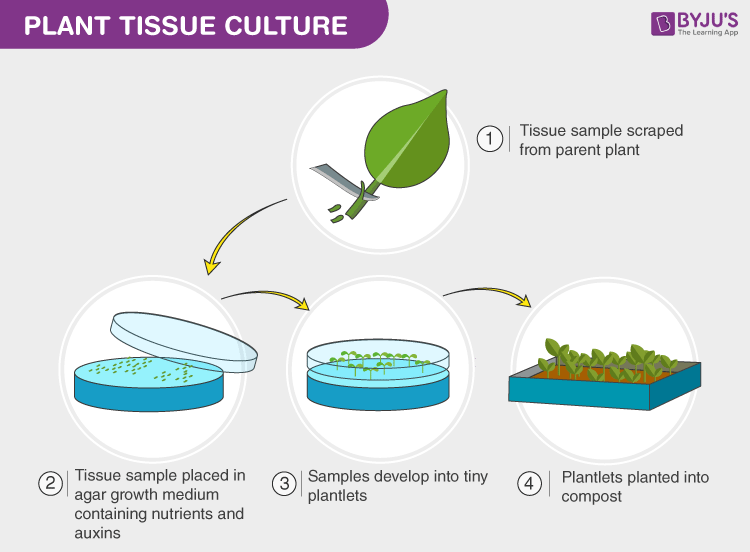
Plant Tissue Culture

    Last week we began our propagation part of the course. We went on a field trip to Waimea nurseries in order to see their bench grafting in action. While we were there the guy speaking with us mentioned that they were in the process of setting up a tissue culture laboratory. I found this quite interesting so decided to do a little research on growing plants from tissue culture.

Plant Tissue Culture - Types, Techniques, Process and its Uses

The first video I found has a good overview on tissue culture and how it has evolved over the years. https://www.youtube.com/watch?v=xuwV3ywCxW8&list=WL&index=3&t=0s  

It also points out some benefits of tissue culture:
- Large numbers of plants can be grown in a short period
- Healthy plants can be grown from diseased plants
- Plants without seeds can be multiplied
- Useful when sexual reproduction is not possible

https://www.plantcelltechnology.com/pct-blog/advantages-and-disadvantages-of-plant-tissue-culture/
This website is also a good overview and it notes some of the disadvantages as well.

https://www.youtube.com/watch?v=SKxgPXOTH4M
This second video is a bit longer but touches on some more interesting points. Kaylee talks more about tissue culture for growing houseplants and how beneficial it is for filling the sudden customer demand that can come with houseplant popularity. She is based in the UK and mentions that 80% of plants in "big box stores" are grown from tissue culture. I would be very interested to know what our percent is here in NZ, I imagine it would be a lot lower! 

Kaylee also talks about how the scientific developments in tissue culture are kept secret as it is important intellectual property to the businesses that are researching it. Dave at Waimea Nurseries also touched on this, not just in reference to tissue culture but to any research and development in horticulture. He said that the industry can be somewhat cut-throat when it comes to new ideas. At the end of the day it all comes down to money, and the right intellectual property can mean financial gain for a business.

It seems that growing from plant tissue culture is all about mass production and it may just be the way of the future!

Sunday, August 23, 2020

Re-veg check

    Part of our re-vegetation assignment is to monitor our plantings every 4-6 weeks. So last Thursday in the pouring rain, four of us ventured out to the planting site at Moturoa. Overall the site was looking good, the survival rate of plants was high and there wasn't many weeds growing. 

We didn't spend a huge amount of time there due to the weather. On our next check we will hopefully be able to take the time to check all of the plants more thoroughly and maybe remove weeds around the bases if necessary.

We did notice some pest damage particularly on the ngaio leaves as seen below.


There were also a couple of manuka that were looking rather brown and probably will not survive. One of the covers had blown over so we put that back in place. 


Even though it was a quick (and wet!) visit, it was great to see our plants surviving and I look forward to going back in years to come to see this stretch of native bush regenerating.


Sunday, July 26, 2020

Re-vegetation


On Friday we went to Moturoa (Rabbit Island) to do some re-vegetation planting. Two people from the council met us there, they are responsible for overseeing a huge planting project on Rabbit Island. 
The island is used for pine forestry, these pine trees were previously planted right up to the water's edge. Now we are realising that this is not a good practice so a 30 metre buffer of native bush is being put in place. This project is part of the One Billion Trees Programme. More information about this government programme can be found here- www.teururakau.govt.nz/funding-and-programmes/forestry/one-billion-trees-programme/

We used cardboard guards produced locally.

Planting a manuka tree, it was very sandy which made it easy to dig!

It was a lovely day out in the sun. We planted totara, manuka and ngaio. There were 6 of us planting and we managed to plant 184 trees in about 3 hours, an average of about 10 trees each per hour.


Monday, July 20, 2020

Hinewai Reserve

We are starting a re-vegetation part of the course this week. My biggest re-vegetation inspiration is my Great-uncle Hugh Wilson. He is the manager of Hinewai reserve on Banks Peninsula (near Akaroa). He has done a huge amount of work to re-vegetate the large valley but his main legacy is that he allowed gorse to grow (to the horror of local farmers). Gorse is a nitrogen-fixing plant so it is great for improving soil conditions, it also provides the right amount of shade for native seedlings to survive and eventually these natives grow taller than the gorse and shade it out, killing it off. Hugh allowed nature to work through this process and has achieved a large native forest regeneration without a huge amount of human intervention.

Stop everything and watch this short documentary right now:

Hugh is incredibly intelligent and creative. He also puts together a biannual newsletter called Pipipi. Hugh hand-writes the newsletter and includes a number of his own beautiful drawings of plants and wildlife. He also adds a few cartoons and his writing is often amusing as well as interesting. I have included subscription information below for anyone interested, it is free but donations recommended!
You can also visit the reserve on foot, or check out their website here: https://www.hinewai.org.nz/


Sunday, July 19, 2020

Bare-root trees

Last week at work we had a delivery of bare-root fruit trees from Waimea nurseries. A lot of the trees had been pre-ordered by customers so it was interesting to see which trees were popular. We spent the morning putting together orders. The trees were placed together in a recycled plastic bag with damp pea straw covering the roots and were labelled with the customer's name and number. We then put aside a selection of varieties to be potted up into PB 60s, the remaining trees were put in a sack with pea straw and taken to the shop to be sold bare rooted.


The boss kindly said I could take some pea straw and a nectarine tree home (I've been meaning to get one for ages!). I dug a hole about 3 times the size of the roots. It was a larger hole than recommended but the last time I planted a fruit tree it took a long time to settle in so I wanted to give this one the best start possible! Our soil is also very stony, so I filled the hole with compost and added some slow release fertiliser for good measure. While doing this I had the roots of the tree sitting in seaweed tonic to reduce transplant shock. Finally, I planted the tree, covered the soil with pea straw and gave it a good watering.

Hopefully it will be happy and grow well for me!💚


Wednesday, June 17, 2020

Gardening By The Moon


This week, while I was at work, someone mentioned gardening according to the moon cycles. I hadn't heard too much about this so I did a little bit of research. This belief has been around for hundreds of years and involves planting and harvesting at different times of the month depending on whether the moon is waxing or waning. There are gardening calendars available with this information on them and I also found a few NZ websites about it-
www.koanga.org.nz/knowledgebase/moon-calendar-2/
https://organicediblegarden.co.nz/gardening-by-the-moon/

However after a bit more digging I found that there is not a lot of scientific evidence to back up these claims. The moon's gravitational pull does cause tides but the amount of water in plants is so small that the effect on them would be almost nonexistent. The following article also explains that the theories themselves contradict each other so they are hard to believe.
www.gardenmyths.com

My coworker put it best when she said that even if the theory does hold up a productive nursery can't really follow this schedule as we need to be planting, pruning, potting up etc all month and can't restrict ourselves to the moon cycle.

I would be interested to hear of anyone's experience with gardening by the moon or if you know of any good studies on it 😊


Tuesday, May 26, 2020

First Day of Work

    I had my first day of work experience today. I am volunteering at a local nursery/shop called The Plant Barn. It is a small nursery that provides for the local community. They grow and sell a lot of different plants including fruit trees, shrubs, natives, vegetable seedlings, perennials and succulents.

    My first job was to make up some potting mix and use it to fill several trays of 6-cell punnets. I then had to prick out vegetable seedlings and plant them in the trays. I planted cauliflower, spinach, silver beet and pansys. I learnt that it is best to hold the seedlings by the leaf rather than the stem. Holding the stem can cause the delicate seedlings to bend and die. I used a simple pricking out tool which can be seen in the first photo, basically just a pointy stick!

Spinach seedlings ready to be separated

Halfway through

All done. Silver beet, cauliflower and spinach seedlings